


SEO Isn’t Dead: Michał Suski on AI, Surfer & the Future of Search

Vilnius has, in recent years, become an unlikely but increasingly important stop on the global SEO circuit. This week, that momentum gathered at the Baltic-Nordic SEO Summit, a two-day conference that draws together some of the industry’s most recognizable names for a mix of keynotes, workshops, and closed-door mastermind sessions on everything from AI-driven search to content strategy.
Held at the AC Hotel in the city center, the event blends theory with practice: short, insight-heavy talks, hands-on sessions with large language models, and smaller group discussions designed to turn ideas into tactics. It’s also increasingly where different schools of SEO, technical, content-led, and more experimental approaches collide.
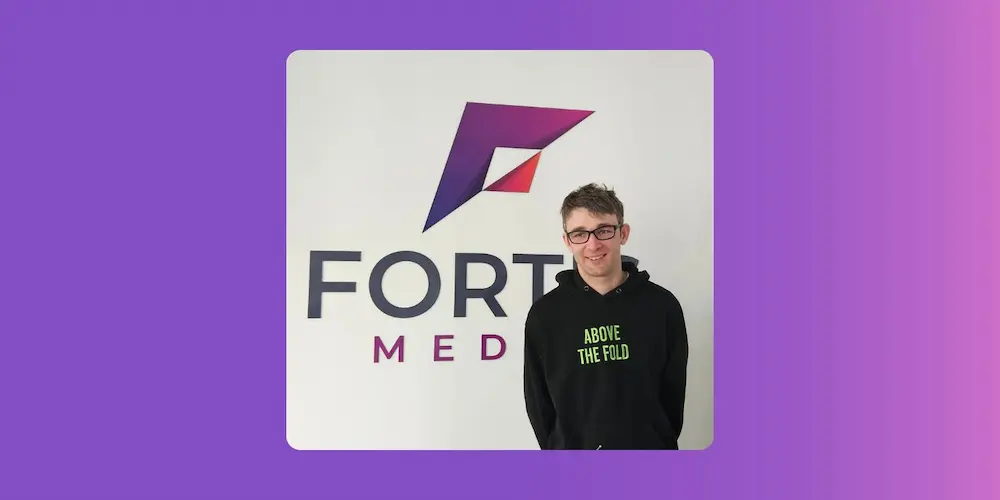
Michał Suski was in town for exactly that. As a speaker and mastermind host, he had spent the previous days discussing the future of search with peers and competitors alike. Before returning to the conference floor, he stopped by the Fortis Media headquarters for a conversation that quickly moved beyond product updates and into something broader: how the rules of visibility are changing and what replaces them.
As the co-founder of SurferSEO, Suski has watched the industry evolve from a “blue ocean” of opportunity into a crowded, fast-moving space now shaped by artificial intelligence. Yet his core belief remains disarmingly simple: SEO isn’t disappearing, it’s adapting.
What followed was a candid conversation about Surfer’s origins, the realities of building a product far from traditional tech hubs, and what it takes to stay relevant as search itself is being rewritten.
How did SurferSEO start? What’s the story behind it?
For me to join the SEO industry, it was by accident because I live in a rural area in the southeast part of Poland, with only small villages around. A friend of mine had an SEO agency in a neighboring village, and he said, “Maybe you want to try SEO.”
At first, I didn’t even know what it was. I started writing PBN content, basically what everyone does at the beginning. But what I really liked about the industry is how fast it changes. You don’t need 10 years of experience to deliver results.
Because we were in a village, there was no one to hire. So instead of scaling through people, we decided to scale processes.
We built a prototype in 2017 with my brother, who is a programmer. It worked for our agency, so we thought: if it works for us, maybe it can work for others.
That’s when we decided to quit client work and focus fully on the product.
What were the biggest challenges in the beginning?
The biggest challenge was dealing with changing Google search result pages. We were scraping data, and every time Google changed something, like adding new ads, we had to adjust.
Eventually, we realized it was better to outsource scraping and focus on what we do best: reverse engineering search results.
That decision freed up resources and allowed us to build better tools.
What was the most difficult period in the last 10 years?
The most difficult time came recently, about 2–3 years ago.
There were three main challenges:
- A surge in competitors, with new tools appearing every week
- The collapse of many affiliate businesses (our core users)
- The AI boom, with people trying to replace tools using custom GPT setups
We were used to a “blue ocean” with little competition. Suddenly, it became a “red ocean,” and growth became much harder.
At the same time, we had internal financial challenges, including buying out a major shareholder.
But things stabilized again as the market evolved, especially with the rise of AI visibility.
What should agencies focus on today when creating their AI SEO Strategy?
When creating their AI SEO strategy, agencies can increase their revenue by offering AI optimization services.
Clients are now asking: “How do I become visible in AI answers?”
The principles are similar to SEO, but instead of backlinks, you focus on:
- Citations
- Brand mentions
- Positive sentiment
You also need to structure content so it’s easy for AI to retrieve information: clear structure, logical flow, and concise answers.

“Make your content easy to retrieve.”
AI prefers content that is easy to extract information from.
That means:
- Strong structure
- Clear progression between paragraphs
- Minimal fluff
Every unnecessary word is a wasted token for AI.
Which metric is the most underrated by users of SurferSEO?
Fact coverage. It’s essentially entities with context, pulled from both search engines and AI sources.
We’ve seen a strong correlation between fact coverage and both Google rankings and AI citations.
Any specific strategy for gaming or iGaming?
I would create self-promoting listicles. For example, “best free spins casinos,” where your brand appears at the top.
There is a strong correlation between your position in these listicles and your visibility in AI-generated answers.
Even though some people claim listicles are dead, the data shows they still perform very well.
Many agencies fail to update content frequently enough.
SEO is dynamic, and content needs to be refreshed regularly to stay competitive.
There’s a lot of talk about SEO being dead. What’s your take?
SEO is not dead; we just have to adapt.
AI systems still rely on search engines to retrieve information. As long as that remains true, SEO will continue to be essential.
Keywords still matter, but they’re no longer the primary focus.
Today:
- ~70% of value comes from semantics, structure, and topical authority
- ~30% comes from keywords
“AI is replacing junior roles, but creating new ones.”
AI is already replacing some junior roles.
To stay relevant, people need to act as the bridge between AI and business strategy. If you don’t use AI, you will fall behind.
In the future, agencies will have their own internal tools that combine data from multiple sources: Surfer, Ahrefs, Google, and AI systems into a single workflow.
What’s next for Surfer?
There are two main focus areas:
- Improving the content editor workflow
- Expanding AI visibility tools and making them more actionable
The goal is to move from data → recommendations → execution.
Where SEO Goes From Here
As our conversation wrapped up, one thing became clear: the future of search won’t be defined by a single tool, tactic, or platform. It will belong to those who can adapt fastest, combining structured thinking, strong fundamentals, and a willingness to work alongside AI rather than against it.
For Michał Suski, that evolution isn’t something to fear. It’s simply the next phase of an industry that has always rewarded those who move early and think differently.
SEO, as he puts it, isn’t disappearing. It’s just being rewritten in real time.


Read our other articles

How to Get Casino Backlinks That Actually Rank Your Site (2026)


How SEO Helps Online Betting Operators Achieve Growth
